AI Needs a Place to Stand
World models, AI Terminals, AI Hosts, and the physical layer for intelligence in real places.
SIMLABS / RESEARCH AND ENGINEERING
simLabs is the research and engineering group building the Terminal software today and the venue-state, simulation, evaluation and physical-deployment stack around it. Production hardware, Host embodiment, trained venue world models and fleet learning remain explicit next milestones.
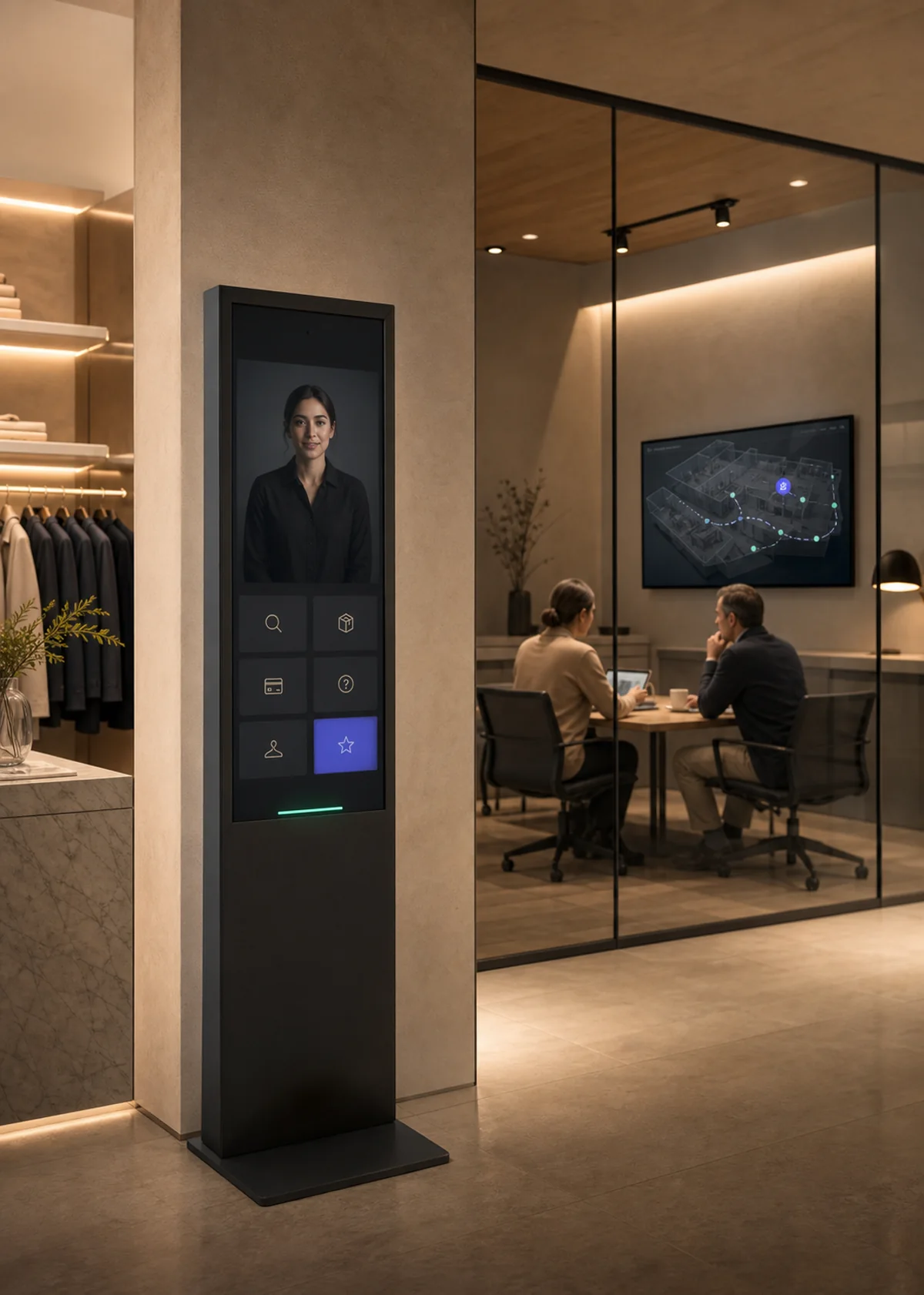 CONCEPT VISUALIZATION · NO VENUE DEPLOYMENT SHOWN
THE POSITION / PHYSICAL INTELLIGENCE
A capable model is one part of useful help in a real place. The Terminal or Host also needs a physical point of presence, current venue state, supported actions, operations and feedback from what happened next.
AI needs a place to stand. We are building it where intelligence meets a person, a venue and a consequence.
PUBLISHED / THE ARGUMENT ON THE RECORD
What we believe, with the field's evidence behind it. Every source independently re-checked before publication.
World models, AI Terminals, AI Hosts, and the physical layer for intelligence in real places.
THE CHAIN / PHYSICAL TO DIGITAL
From physical interface to venue state and governed improvement, simLabs owns the integration boundary. Some layers will be built, others adopted; all must be inspectable, testable and replaceable.
The target enclosure, display, microphones, speakers, sensors and compute for a service point designed to work on a public floor.
ROADMAP CONCEPTThe current demo runtime, voice interaction, on-screen experience and deterministic tools, followed by the operational controls required for a deployment.
DEMO TODAY + ROADMAPThe current demo uses adopted speech models. The research program evaluates what should be adopted, adapted or trained, and what should eventually run locally.
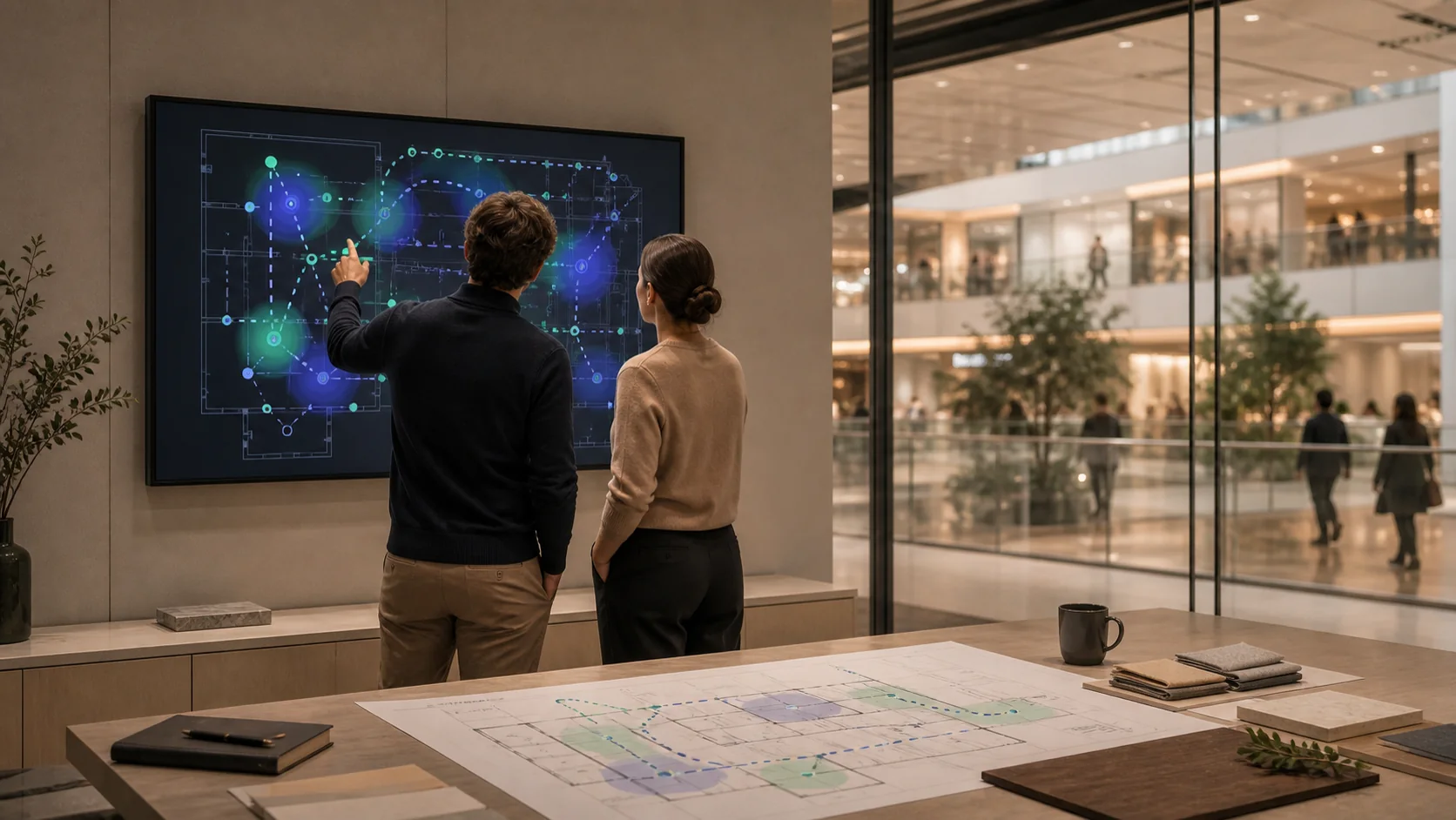
DEMO TODAY + RESEARCHThe current demo binds synthetic venue facts to a deterministic navigation graph and presents computed routes in 3D. Real venue capture remains pilot work.
DEMO TODAYDigital host surfaces in the demo, with licensed likenesses, light-field presentation and mobile embodiment treated as future product and research directions.
DEMO + ROADMAPOperational records first; training, cross-venue learning, derived datasets and external licensing only where applicable law and separate purpose-specific permissions allow them.
ROADMAP CONCEPTSIMLABS / CONCEPT FILMS
These films visualize the target simLabs system: venue-state preparation, spatial routes, traceable handoffs and governed improvement. They are product concepts, not deployment footage.
Rehearse for the venue. Map the real place. Connect to the operation. Improve under customer control.
A compact campaign edit for launch posts, venue presentations and partner outreach.
A representative designed around venue state leads into an indoor route and inventory map, then a traceable human handoff, aggregate experience intelligence and the governed learning loop we intend to build across service points.
RESEARCH / BUILD / PROVE
Standing research and engineering programs, run like a lab and shipped like a product company. Proof of concept first; deployment when it earns it.
We study frontier models and turn what holds up into agents that can listen, speak and act in a loud, physical place.
Useful findings can become runtime capability, evaluation infrastructure or a publishable technical artifact.Evaluate which models should be adopted, adapted or trained for grounded service, noisy environments and future local execution.
The current demo uses adopted speech models; in-house model training is not yet a reported result.The demo presents a synthetic venue and deterministic navigation graph as a navigable 3D experience with precise indoor routes.
A real venue capture and update workflow belongs in the first pilot.Synthetic products, services and resources are mapped to exact locations a visitor can route to in the public demo.
The graph supports closures, accessibility constraints and multi-stop journeys.Production Terminal hardware and its software, operational controls and serviceability designed as one deployed product.
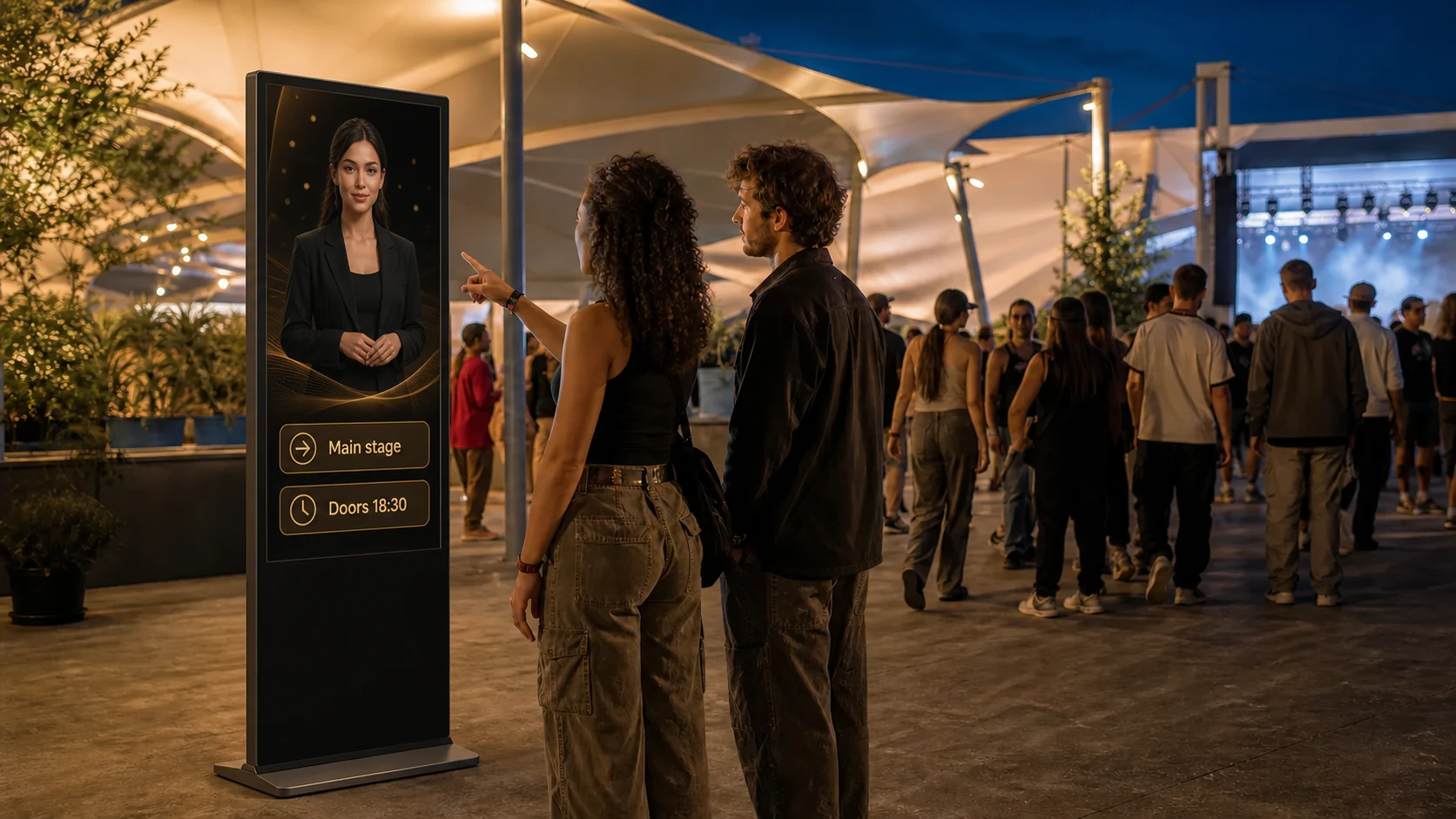
The final enclosure, certification and production deployment remain product work.A future program for 2D and 3D venue hosts and consented, licensed likenesses of artists, athletes and ambassadors.
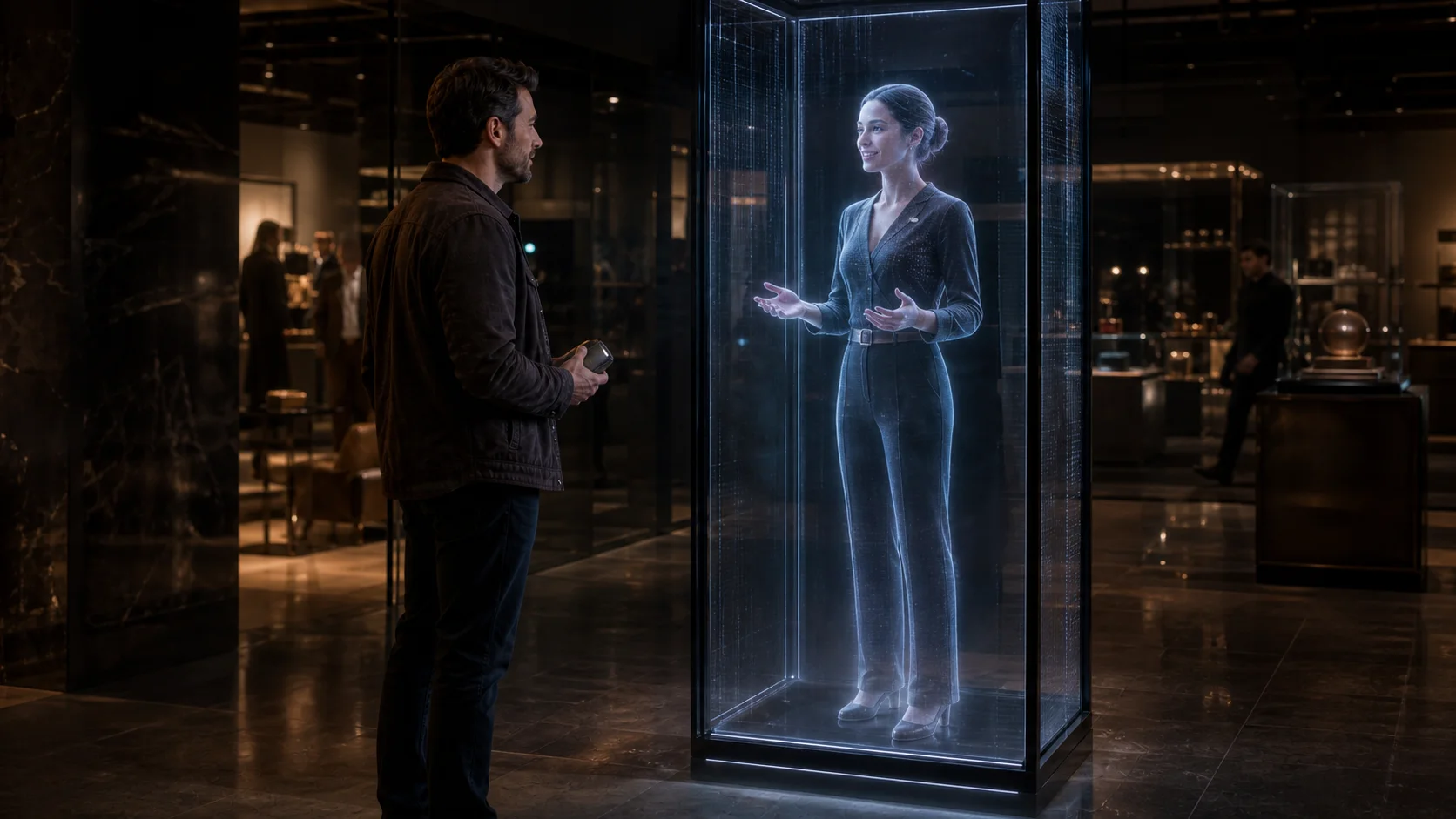
Consent, licensing and final approval sit with the person.Research directions that move the same service beyond a conventional screen through light-field and eventually mobile embodiment.
No holographic or robotic Host is reported as deployed today.The public preview shows handoff, case-management, governance and learning workflows using synthetic records.
No live customer system is connected; integration and data rights are deployment-specific.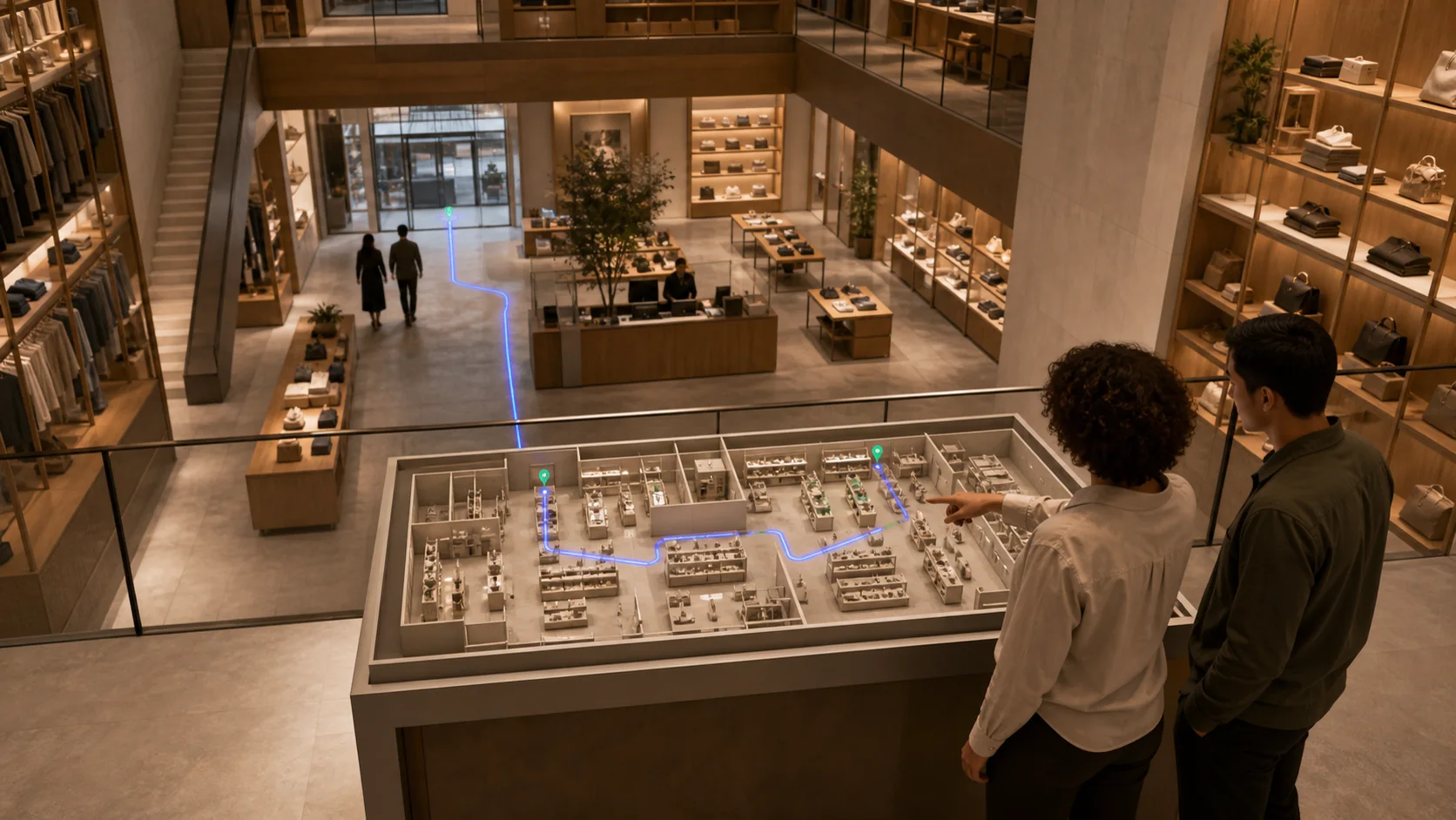 SPATIAL + INVENTORY INTELLIGENCE
ONE QUESTION / ONE CONNECTED SYSTEM
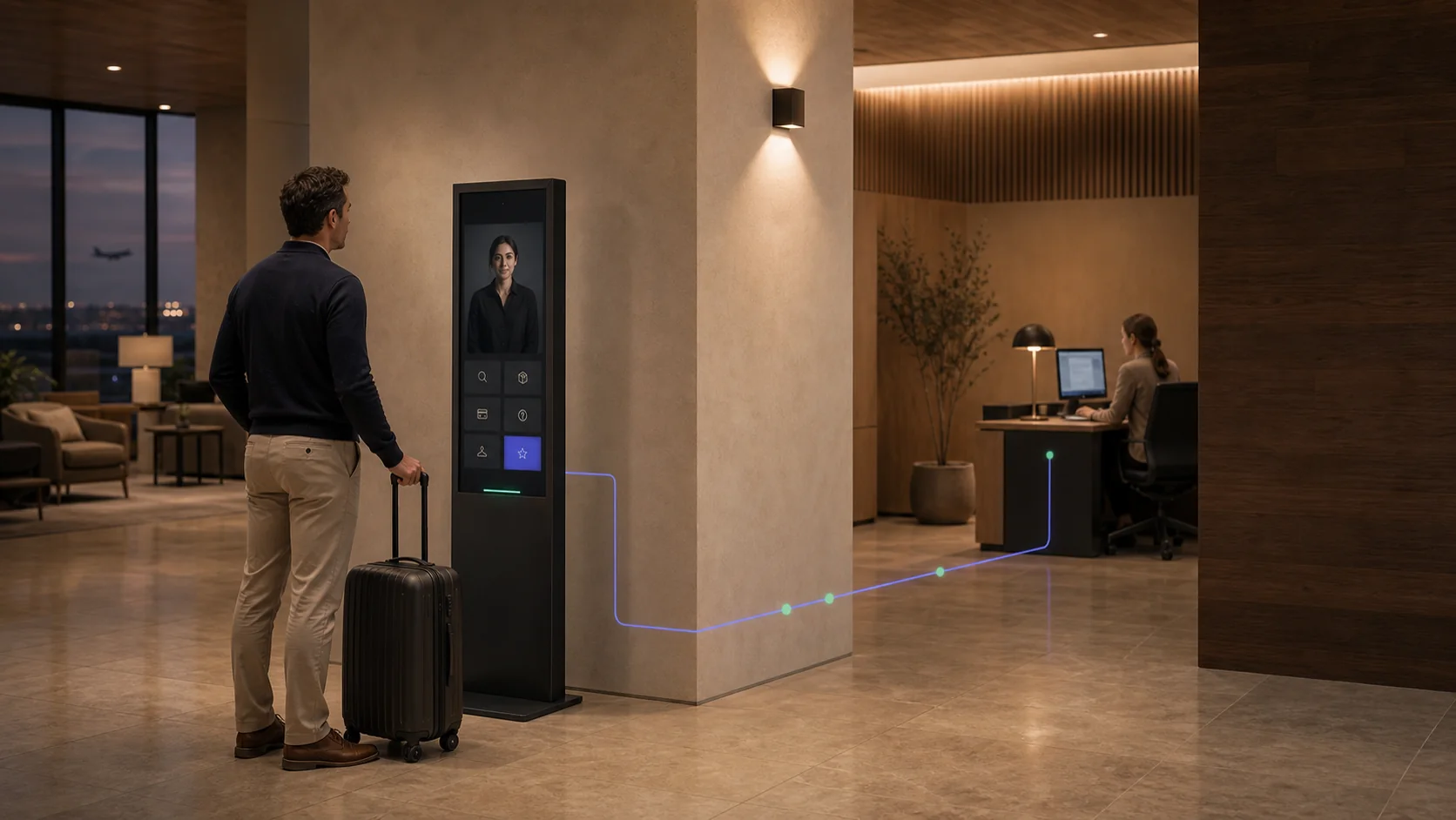
In the current software demo, a visitor asks for an item. Model services interpret the request; curated fictional inventory and deterministic route tools ground the answer; a 3D presentation shows the path. Unfamiliar questions may produce clearly fictional adaptive results. A venue pilot will test the same sequence against authoritative systems and a real floor.
ROADMAP CONCEPT / RIGHTS REQUIRED
With the person's consent and a valid license, a future Host could carry an approved likeness and voice. The concept is a rights-controlled interface for venue questions, fan experiences and clearly disclosed campaigns.
LONGER-TERM INTERFACE RESEARCH
The grounded service developed for a fixed Terminal could later appear through a light-field display and, in time, through machines that move. simLabs intends to explore these embodiments after the fixed Terminal earns its place.
SIMULATED TODAY / PILOT INTEGRATION
The target workflow can create a case, attach authorized context and route it to the customer's existing support system. The public preview simulates this handoff; no live customer system is connected.
FUTURE OPTION / CUSTOMER-AUTHORIZED EXPERIENCE
Aligned records of intent, venue state, action and outcome could support operational analysis and future model training only where applicable law, a declared lawful basis, notice, data-subject rights and separate contractual permissions allow it. This is not a current dataset product, and external licensing would require its own explicit right.
PILOT TARGET / GOVERNED IMPROVEMENT
The target operating model places Terminals where help is needed and lets the venue review candidate improvements centrally. People decide what becomes reusable. Cross-venue learning remains a research direction.
Each future service point can serve the questions, routes and workflows of its own zone.
Authorized records can reveal patterns, unresolved needs and candidate improvements without exposing unnecessary personal data.
Only reviewed answers, routes and resolutions should become reusable venue knowledge.
Approved changes can reach the relevant service points through a versioned, evaluated release.
OUR MISSION
So store, venue and event teams can focus on the work that needs people most.
CONTACT / TALK TO SIMULATINGMACHINES
Bring us one place and one repeated problem. We will scope a bounded paid Terminal pilot: sources, routes, service limits, handoff, measurement and the physical interface.
Talk to SimulatingMachines